

The Unbearable Lightness of Being Entertained

This commentary was published in the Magis Center Blog on Nov. 8, 2023. The Magis Center, founded and led by Rev. Robert Spitzer, SJ, seeks “to restore, reconstruct, and revitalize belief in God, the transcendent dignity of every human person, the significance of virtue, the higher levels of happiness, love and freedom, and the real presence of Jesus Christ.” The blog is read by teachers and catechists, clergy, and a large audience of viewers of “Father Spitzer’s Universe,” a weekly discussion series on the EWTN television network. Bill is an occasional contributor to the blog. Also find this commentary and much more in “Phronesis in Pieces” Bill’s publication on Substack.

As we catechize young people, we quickly learn that this ministry isn’t a monopoly. We are competing with the countless counter-messages of a secular society. 

It may help to think of today’s “alternative lessons,” which are generated largely by the ubiquitous entertainment industry, as an alluring, easy-to-consume catechism. 

Young people—and adults, too—have more questions, spiritual and mundane, than ever before. We struggle to adapt to what has been called “liquid modernity,” where new circumstances surge in like the daily tides. Producers of popular culture provide compelling guidance to surf the waves of change. Imagine if these were presented in a compendium-like Q&A format. 

Tragically, the answers would be incomplete, to the point of dismissing, misinterpreting, ignoring, or scorning timeless insights and values the Church provides. The “A” in the secular “Q&A” is often vague, without much definitional rigor or critical thinking, simply adopting the narcissistic, emotion-based tenor of our times. 

The answer is also packaged to be easily absorbed and memorable—adding a “spoonful of sugar,” or a dopamine hit, to make it persuasive. Thus, the competition between this pseudo-catechism and the Catechism of the Catholic Church is profound, demanding wisdom and zeal from all of us. 

An Overture for Evangelizing 

The USCCB’s new Institute on the Catechism initiative has this in mind, at least implicitly, as it faces the challenge to develop its new guidelines. 

This new approach “recognizes that the passing on of the faith is no longer in a Catholic culture, but in a secular and hostile culture toward Christian faith,” according to Bishop Frank J. Caggiano of the Diocese of Bridgeport. 

He talked about the new challenges in an interview with Catholic News Service last year. The USCCB’s Subcommittee on the Catechism, which he chairs, is launching a new “springboard for faith formation” because Catholic parishes need to re-create a “Catholic culture that recognizes we’re in the 21st century,” as CNS reported

Recent decades have not seen “catechesis” flourish. Of course, we think of the standard, religion-based definition of the term. But some type of catechesis will always occur so long as people have soul-searching questions; the absence of one type merely leaves a vacuum to be filled by other means. 

The etymology of the term, rooted in the Church, draws upon the Latinized form of a Greek word for “instruction by word of mouth.” But one source suggests catechesis originally meant “to resound … in someone’s ear,” and kata implied “down” as in “thoroughly.” We might posit an unofficial definition: “oral instruction that resounds deeply.”  

The mission of an “evangelizing catechesis,” at the heart of the bishops’ new project, is all about fostering an individual’s encounter with Jesus Christ and helping it to resonate through the Church, as explained in an article in The Pillar. 

Many people have traveled on a long detour from Christ, consuming secular “answers” to key questions which arguably make an encounter with Him seem more difficult and foreign. Is He outdated? Is He real? 

This challenge requires not only an increased passion for evangelization, but a more direct confrontation with the proselytizing in popular culture. 

We need to be armed with an understanding of the arguments put forth by entertainers, media pundits, social media influencers, and the amalgam of secular voices—some of them wise, some of them shallow and destructive. At their thought-provoking best, they put us in touch with eye-opening truths; at their worst, they encourage an individual to be satisfied with “my truth.” That’s self-catechesis on auto pilot. 

Many well-intentioned people, immersed in the resounding din of artificial reality,  want a deeper sense of understanding. Lacking good guidance, they surrender to their natural “mimetic desire” to learn from others, to copy the in-crowd.  

Catholic catechists need to formulate for themselves what a secular Q&A might look like. Imagine the internal and external dialogues students experience with non-Christian influencers every day. Too many for-profit prophets seize on ideas and feelings they can highlight at the moment or slip in subliminally as a shading of the facts. 

Those asking life’s important questions get answers which make an impression but lack context or connection to real meaning and clear cognition. Our goal in this case should be to provide responses that illuminate the experience–not by being a buzzkill, but by expanding upon “the rest of the story.” Call this “spotlight evangelization,” which starts with common ground and then widens the aperture to show more that’s going on. 

Of course, the simultaneous advantage and obstacle Catholic catechists face is that our popular culture’s post-modern talking points are moving targets, often cloaked. Many lessons of entertainment are performed and insinuated. They are a patchwork of viewpoints, adopted and amplified on nearly all our screens in varied ways. They reflect a liberated but random human creativity, subject to constant re-definition to address new conditions and causes. 

These do not fit the structure of an authoritative catechism. Some of their principles contain virtues for a serviceable map of meaning—but only if one is not seeking intersections with the broader landscape and the Kingdom of God.  

If pressed, purveyors of this pseudo-catechism will cite intellectuals and arguments for the sake of “truthiness.” But, such sources focus only on “what works” in this world, in the moment. They preach a desire to “be on the right side of history,” to be cool and current.  

The worst of these ideas run contrary to human dignity and God’s love. They tend toward false pride and self-gain. They energize content-producers to create a “buzz,” to be edgy. They ignore Pope Francis’s 2020 comment that “no one is an extra on the world stage, and everyone’s story is open to possible change.” They encourage lockstep adherence to the loudest advocates of poorly defined “progress.”  

Raising the Curtain on Good Questions 

Catholic catechists, and all people of good will, should build up their enthusiasm for an honorable defense of truth vs. mere truthiness. The lackadaisical groupthink spawned on our screens can indeed become “hostile” to living out the Christian faith, as Bishop Caggiano said. 

We can be grateful that our key, indelible resources for a peaceful but impassioned confrontation are decidedly not statements of polarization. They are the Bible and the Catechism of the Catholic Church—two time-tested, life-changing love stories more riveting and uplifting than anything Hollywood could imagine. 

In the context of total love, trustworthiness, beauty, and goodness, to which all human beings are drawn, we can spark a sense of mission, a reason to question and learn more, in those we teach. Our books and their messages have the power to fascinate young people, to reveal what they know their screens can’t show them.  

For example, the Bible has been called history’s first hyperlinked text; it is said to contain 63,779 cross-references. God enables His followers to be storytellers and connection-makers par excellence. 

We all should seize our responsibility to interact, to enter meaningful conversations with hungry audiences, because we bring unique insights to the table. We can serve ourselves, our families, our communities, and the world by pointing beyond randomness and promoting good order with a taste for truth in charity. 

The summons to proactive discipleship—a prebuttal, or preemptive rebuttal—can be galvanizing for young people who are drawn to the spotlights. They should set high standards, rejecting toxic entertainment. W.B. Yeats described the grim scenario of lethargic surrender in The Second Coming: “The best lack all conviction, while the worst / Are full of passionate intensity.” 

Bishop Robert Barron offered his rallying cry in a video last year. “We’ve just got to come to terms with it. The spiritual life’s a battle–always has been, is today, always will be, until the end of time.” Those who stand with the ways of God “will be opposed by many,” with risks for all, and we must not be silent. 

A Catechist’s Role

As a step toward emboldening the over-entertained, catechists and all evangelizing Catholics may have to work harder to explore the polluted waters in which students are swimming. We must be conversant with trends in movies and Netflix series—or worse, the more shadowy abundance of violent video games, TikTok clips, and porn. 

Let’s ask those to whom we minister: What are you watching? How does it make you feel? What impact do you think it has on others? Does it seem really real? Is there another side of the story you would like to understand better? These questions provide teachable moments and opportunities for prayer to the Holy Spirit. 

Such preparation constitutes “basic training”—and fosters self-care—for our nascent corps of servant-leaders. We can affirm youth’s dissatisfaction with the status quo and “the same old story.” A serious mission to think for themselves, to make their passions more compassionate, may help young people to stem the tide toward anxiety, addiction, violence, suicidal thoughts, and cynical isolation in their ranks. 

The Catechism can reveal a wonderful legacy of well-considered, organized, connected answers. But we all need to be asking the right questions, with a pressing need in mind. 

This all can start with an authentic, amplified, Christian concern recognizing and addressing the dubious messages found in our popular media, even as we highlight and applaud various theatrical thrills and constructive lessons pumping through our cultural lifeblood. 

Our evangelization today will resound deeply amid this century of challenge and tumult. The bishops recognize that a peaceful but profound face-off between two divergent catechisms is already occurring, with eternal consequences. Christ is the answer, to be sought in all our virtual or very real adventures–making us learners/disciples, not mere spectators.  

Let’s “praise the Lord and pass the ammunition” for our high-definition, panoramic battleground. As a preliminary checklist of protocols and tactics, reflecting on St. Patrick’s Breastplate Prayer can help us get ready for the spotlight. 

Image from ClipSafari.com, a collection of Creative Commons designs.

Posted in Education, Prayer, Spirit of communication | Leave a comment

Oh, Grow Up! But How?

This commentary was published in “Phronesis in Pieces” at billschmitt.substack.com on Oct. 30.

Just as an apple doesn’t fall far from the tree, we need to see the members of “Generation Z”—now in their teens and twenties—as products of generations that came before. Our young people are making news in ways that deserve our understanding and compassion, as well as our humility, in the assessments we conjure.

Older folks have seen reports, most recently centered on college-campus and big-city reactions to the Israel-Gaza war, which suggest we have raised a paradoxical generation. They combine empathy and intolerance, idealism and frustration, pragmatism and confusion.

In other words, as Harry Chapin foresaw in the 1974 song Cat’s in the Cradle, they have grown up just like us.

Reflection on this drives me back to generational theory, a description of different age groups outlined most recently in Neil Howe’s book, The Fourth Turning Is Here. The analysis, which I have supplemented with various sources, is neither comprehensive nor fully convincing, but it’s a start.

I decided to sum up for myself the points Howe and others make about the four generations which are center-stage in today’s America. May they offer some illumination for us because we theoretically face dark times ahead—that’s the “fourth turning” from his cyclical perspective.

The goal is to discern a timeline that moves onward from the “Baby Boom” and gives us wisdom we can share with Gen Z in their (our) moment of need.

Baby Boomers (born 1946 –1964): “Any dream will do”

According to Howe, who debuted his innovative overview in the 1992 book Generations: The History of America’s Futuremy age cohort is the Baby Boom—about 69 million people now ambulating through our 60s, 70s, and beyond.

We tend to be gloomy about how this nation has developed during our lives. But we need to be keepers of traditional and/or idealistic American values.

We began our journey in the cultural safe space that followed World War II, which Howe posits was the most recent fourth turning, 80 years ago. This opened the door for a 1960s “love generation” of rebellious, idealistic hipsters who later proved to love themselves.

As recounted in Jackson Brown’s song, The Pretender, we converted to believe in “the dreams that money can buy.” We populated the suburbs, as well as the ranks of today’s economic, governance, and entertainment elites.

Howe believes many younger people will appreciate Boomers’ motivations, efforts, and lessons learned as America’s devil-may-care season withers. He’s an optimist.

Senior citizens will welcome the role of sages, he predicts, and willingly share in the sacrifices of the new “fourth turning.”

I wonder how much of the sacrifice will be self-denial and how much will be denial imposed upon the Boomers by financial and policy exigencies. Which of our dreams will prove inspiring, to us or to others?

Remember, plenty of today’s elders were never elites. Many simply will aspire to stretch their Social Security and retirement savings into an eighth decade of life, with questions of long-term care and mortality looming.

PBS report early this year cited “a ballooning population of older homeless people.” Boomers are carrying their accumulated wealth into retirement, but, as with all the generations, the sense of security is distributed unevenly.

Generation X (born 1965 – 1980): “Just do it”

These 65 million adults grew up with hurdles in their personal lives. Many were “latchkey” kids of the Boom and its preceding “Silent Generation”—note the birth-years of President Biden (1942) and son Hunter (1970), for example.

Many Gen-Xers endured distracted or mediocre parenting or were children of divorce. They developed low self-esteem and a tough-minded, practical “take care of yourself” or “trust your own instincts” mind frame, says Howe.

Gen X has grown up to include entrepreneurial, individualistic antiheroes. This means a smaller stake in the established order that grew up around them. They are ready to protect their family but less invested in community institutions, national politics, and religious affiliations.

The best-selling motivational book, Looking Out for Number One (1977), may have served as inspiration for many in this generation.

Regarding religion, authors Jim Davis and Michael Graham of the new book The Great Dechurching write that the phenomenon of exits from regular participation in the Catholic, Mainline Protestant, and Evangelical churches surged between the late 1980s and the late 1990s, among people aged about 13-30.

In any event, Howe seems to say Gen X will approach the tough times ahead like bold, resilient contestants on the “Survivor” reality-TV series, launched in 2000.

The latest news from that series provides an ironic caveat: In the current season, two Millennial contestants have already voluntarily quit the island. That has prompted some critics to perceive a “coddled,” whining cadre with low levels of stick-to-itiveness.

Millennials (born 1981 – 1996): “Precarity, so charity”

The 72 million people in this cohort have grown up with hurdles seen less in their families than in society at large. The world appeared increasingly risky, but they found sources of support. They saw parents as heroes, and a meritocratic culture of diligence offered them a path to thrive amid difficulties.

Millennials’ trudge uphill led them early on to do well on tests, to pursue credentials and contributory achievements valued by family and friends, according to Howe. Community and kindness are important to this generation, which watched charming Disney movies, as well as “Friends” and “The Big Bang Theory.”

But anxiety, boosted by events like the 9-11 terror attacks, made Millennials adopt traits of rationalism, objectivity, systematized thinking, “effective altruism,” avoidance of controversy, affirmation of others, and achievement of goals. They came to see dating and marriage as desirable but dodgy territory.

The World Wide Web introduced this generation to massive waves of information and distraction, even as the quality of K-12 education and personal attention spans were starting to slip.

The current state of society appears fragile to these individuals, and they generally  want to help and serve. But they are concerned about their economic prospects, says Howe, and many see a need for a large government—one which might lean toward socialism and increased power to meet huge challenges.

When they have formed families, Millennials’ approach has often been “helicopter parenting” to protect their children.

“Parents shuttle their kids to various activities and help them with their homework because they want them to get ahead,” wrote Allison Schrager in a Bloomberg News commentary this month.

She warned new research suggests “more time spent with parents and less in unstructured, non-supervised play” may correlate with greater risk-aversion, which implies reduced business success and declining mental health among young people.

That leads to the story of Gen Z, which begs an examination of American sensitivities and proclivities on various fronts, among all age groups.

Generation Z (born 1997 – 2012): “Snowflakes and climate change”

Our society monitors the 70 million members of Generation Z up-close through cameras now focused on our classrooms and college campuses, and the work world sees them too. These children of Millennial and Generation X parents have grown up with a praiseworthy sensitivity which inclines them toward empathy for others. That’s partly because the first victims and aid recipients they see are themselves.

Howe says many of them are awkward and self-conscious, having few memories of a confident, united, happy America. They face high costs and big debts. The American dream, even the idea of America, are nebulous.

Have they become “snowflakes”? Many were raised in homes armed with electronic security devices like fortified bunkers. Those shields also have included social media, video games, and any pressure-release valves—real or artificial—which a technocratic, therapeutic imagination can serve up. These cultivate a comfortable boldness, substituting for authentic encounters with the profound presence of heaven and hell, love and hate, good and evil.

We can propose many more attributes, acknowledging that these describe some, certainly not all, in the Gen Z cohort.

In a polarized and violent world, they have learned to watch out for strangers, to avoid arguments, to stick close to allies, and to report when their well-being faces assaults. Elders assure them of their personal qualities and societal freedoms, encouraging them to follow their emotions and instincts.

They lack a strong, inherent sense of identity, especially if their family has itself become fragmented and set adrift without religion, accountability, anchorage in cultural roots, or trust in the good intent of community structures.

In a post-truth cultural climate that questions expertise, excellence, and rigorous judgments, Gen Z members see the value of a good education, but they are not sure they have gotten one or need one.

They have picked up what they need to know through shortcuts and (often virtual) friends. Knowledge of humanity’s ups and downs has flunked as uninteresting or uninspiring. They received history as old data—not as ongoing stories packed with context and principles, reasons to stand tall and bow humbly.

Others have stepped in to provide serviceable stories and agendas, not requiring reflection. Gen Z’s natural instinct to discern who they are and their mimetic desire to “fit in” have led them to groups who offer compelling identities, virtuous-seeming ideas, and support among fellow travelers. Inexperienced people are likely to stick with these allegiances until larger, harsher aspects of reality impose consequences.

For now, they feel intellectually and morally excellent just as they are, and they are in charge of defining those standards. Traditional means of formation like meritocracy, going the extra mile, and walking a mile in someone else’s shoes seem tedious.

Challenges to their excellence constitute existential threats. If they lack the knowledge and communication skills to win debates on complex subjects, they can replace such reality checks with demonstrations of passionate zeal and rejection of their opponents as dangerous “haters.”

In a world without God as a source of eternal truth, merciful love, and human dignity, they cynically whittle purpose down to politics—a game of power, greed, and persuasion waged between the oppressed and oppressors. Lacking balance from a reasoning community, even noble goals of peace, tolerance, and risk-minimization require aggressive acts of enforcement.

Only big government and ideological groups can supplement GenZ’s parents as long-term protectors and fellow crusaders, much as street gangs have become substitutes for families.

The gang motif of action, clout, and camaraderie—a sad distortion of the mythological hero’s journey—may help to explain what journalists now depict as street wars between pro-Israeli and pro-Palestinian demonstrators. We have opened the door to collateral violence, mostly waged through words, but who’s there to moderate it?

Conclusion: “Back to Alpha”

Of course, other generations are there to moderate it. But can we do so, given that all the experiences listed above still leave today’s tumultuous public arena mysterious to us? We must not be surprised that the timeline leading up to Gen Z and our post-modern culture is pockmarked with the pragmatism, pretense, self-centeredness, tension, and lack of direction inherent in human nature.

Answers from age-cohort theory are no better than other forms of analysis based on race, sex, and class, each with its own oversimplifications.

By the way, we have not even examined all the age groups deserving our attention. Think of the “Greatest Generation” and the playground kids we must now cherish as “Generation Alpha.” I have overlaid some of my own research and ideas on the analysis of Howe, with thanks to such sources as the Pew Research Center and the Statista website.

But it’s best to return to the surprisingly upbeat tone of Howe’s book. He reminds us that America has been through all of this fractiousness before, and each population segment has shown it’s got what it takes to contribute to victory over a “fourth turning.”

Here’s hoping the timeline I drew can help us by focusing not on segmentation, but on the need to rise above it. The story of overcoming the evil in our hearts will continue in the future, and we must not carelessly divide terroristic hatred into acceptable and unacceptable parts for the sake of politics or performance. Rising to the standards of our democratic freedoms and a sense of national family, virtuous wisdom can still find many voices.

The apples will fall around the tree, but our priority is to keep that tree standing—a strong society informed by values proven to bear good fruit season after season.

Image from ClipSafari.com, a collection of Creative Commons designs.

Posted in Education, Spirit of communication, Words | Leave a comment

Pilgrimage: A Trek in Nature Brings NY State of Mind to Shrine

Published in The Tablet, newspaper of the Diocese of Brooklyn, on Oct. 28.

Sisters of Life precede a Eucharistic procession that was part of a four-day pilgrimage to the New York State Eucharistic Congress. (Photo: William Schmitt)

ALBANY — Days before some 8,000 Catholics gathered for the New York State Eucharistic Congress, an intrepid team of about three dozen assembled to briefly transform the scenic Empire State Trail from an upstate hiking and cycling route into a local path of pilgrimage.

Previewing the Congress’ goal to deepen devotion to Jesus as really present in the Blessed Sacrament, these New Yorkers walked 57 miles to share their faith in tangible ways, visiting parishes for Eucharistic adoration, meals, and overnight accommodations. They helped communities focus on two destinations — ultimately heaven, and the weekend event at Our Lady of Martyrs Shrine in Auriesville, New York.

Their journey began on Tuesday, Oct. 17, with morning Mass at the Diocese of Albany’s Cathedral of the Immaculate Conception. They received a special blessing from Bishop Edward Scharfenberger, who reminded everyone, “The Lord Jesus is walking with us.” He urged the travelers to “be open” to reflect on the gifts God constantly bestows and to “tell stories” that affirm we are never alone.

This “Way of Martyrs” pilgrimage, traversing towns named Watervliet, Cohoes, Schenectady, and Amsterdam, concluded Friday as many cars and buses were also arriving at the hillside site of the congress. During their days on a road less traveled, those walking viewed neighborhoods, nature’s panoramas, autumn leaves, and the waterways of the Mohawk Valley, evoking historic times of martyred missionaries and the “Lily of the Mohawks,” St. Kateri Tekakwitha.

“It’s wonderful to spend time in God’s creation and to see New York in this way,” said Andrea Reno, one of the pilgrims, an avid hiker and a teacher at St. Pius X School in Loudonville, New York. “We’re passing things I drive right by, but seeing it from a different perspective.

“I’m enjoying the sense of community and camaraderie,” Reno told The Tablet on Wednesday while the group paused to meet with other local Catholics at a park in Niskayuna, near Lock 7 of the Erie Canal.

She reached into her backpack for a booklet with pages written by students aged 5 and 6, as well as adult colleagues. “I’m bringing their prayers with me and praying for their intentions.”

James LaFave, one of the locals who had come to visit with the pilgrims at the park, said his career had made him an advocate for the spiritual value of escapes into natural surroundings.

Now retired, LaFave told The Tablet he frequently had led such walks for students as a campus minister at a Catholic agency for kids whose setbacks affected their mental wellness and academic prospects.

He recalled how “the reflection that’s part of just being out, not spending so much time with digital stuff,” had healing effects on students.

Father Stephen Yusko, one of the two priests who planned and led the pilgrimage, showed a rosary he was using. Each bead was a rolled-up piece of paper bearing the prayer of one his students.

Father Daniel Quinn, a downtown Albany pastor and the group’s other leader, said the parishes extending their hospitality were not limited to Roman Catholic churches. They included St. Ann Maronite Catholic Church, belonging to an Eastern Rite prominent in Lebanon.

St. Nicholas Ukrainian Catholic Church gave the visitors “a whole stack of prayers to take with us, to leave at the altar in Auriesville,” Father Quinn said.

“It’s nice because the whole community is uniting,” Father Yusko added. “People who can’t do the walk are still participating in it.”

The idea for a pilgrimage arose a while ago when the two priests, ordained in the Diocese of Albany within the past several years, discussed their respective inspirations from the Camino de Santiago in Spain — an iconic, expansive journey leading to the Cathedral of Santiago de Compostela.

“We realized we could create something like that pilgrim experience in our own diocese,” Father Yusko told The Tablet. The Camino attracts many people who are “just searching,” he said, much like young adults in America who describe themselves as “spiritual but not religious.”

“We thought it would be a good example for people to at least search for Christ on the way that’s available nearer to them in their home diocese or in New York in general,” said Father Yusko. 

“We’re hoping that this is the start of something. It happens to coincide, through God’s providence, with New York working on the Empire State Trail,” which spans a total of 750 miles. 

The trail, a project launched in 2017, begins at the tip of Manhattan in Battery Park and heads toward the Canadian border via Albany, where the other segment extends to Buffalo.

“It’s helpful to bring out that there’s a lot of Catholic history and roots here that just need to be explored and taken advantage of to show forth the faith again,” said Father Yusko.

When the priests announced earlier this year that they planned a rigorous, four-day spiritual trek timed with the Eucharistic Congress, 35 laypeople of the diocese volunteered. Their average age was under 40.

The group conducted Friday’s six-mile leg of their journey, from Amsterdam to Auriesville, as a Eucharistic procession, with members of the Sisters of Life preceding Jesus in the monstrance. They concluded with Mass in the shrine’s Kateri Chapel.

The time is right for pilgrimages like the “Way of Martyrs,” Father Yusko added, because so many people are suffering from depression and anxiety. “I just think people are yearning for God, and God is always yearning for us to go to Him. This is an outward expression of that, which is a beautiful thing.”

Catholics need to reach out to society with Christ’s love, he said. “I mean, we’re all pilgrims, right? We’re all journeying home to heaven.”

Published with permission from DeSales Media, parent company of The Tablet. Find their content here.

Posted in Prayer, Spirit of communication | Leave a comment

“A Game-Changer”: New York State Eucharistic Congress

Published by The Evangelist, newspaper of the Diocese of Albany, on Oct. 28.

Thousands of Catholics attend three-day, New York State Eucharistic Congress in Auriesville as Bishop Scharfenberger celebrates concluding Mass. Photo by Bill Schmitt


Over 11,000 Catholics converged on the hamlet of Auriesville from Oct. 20-22 for a New York State Eucharistic Congress that highlighted both the immensity and the intimacy of a relationship with Jesus, found truly present in the Blessed Sacrament.

The Diocese of Albany, teaming with the Archdiocese of New York and the state’s six other dioceses, hosted a range of activities as a local component of the Church’s National Eucharistic Revival.

The goal — to restore devotion to the Real Presence and its mystery of love — is a “game-changer” for individuals and the world, as Bishop Edward B. Scharfenberger put it in his homily at the event’s concluding Mass.

“Jesus changes lives,” he said. “Everyone who comes into Jesus’ presence is somehow transformed by that. If we bear the presence of Christ, yes, my brothers and sisters, we will change the world because God wants to save the world through us.”

The 40-hour schedule at the historic Shrine of Our Lady of Martyrs included liturgies as well as nationally known speakers, an expansive and solemn Eucharistic Procession that wound through the shrine’s autumn-colored grounds, inspirational music, abundant opportunities for the Sacrament of Reconciliation, and Eucharistic Adoration in the quiet night hours.

More than 300 priests, deacons and seminarians were part of the opening Mass on Saturday, Oct. 21, with Bishop Terry R. LaValley of the Diocese of Ogdensburg as principal celebrant and a total of 17 bishops concelebrating.

The assembly of pilgrims from across the state filled the shrine’s coliseum. Their faces and voices reflected the diversity of the global Church. The many Spanish-speaking participants heard their language during Mass and keynote talks, and various translations were provided, partly with help from a smartphone app.

“I loved the intertwining of Spanish and English and making sure there was that representation,” commented Joliz Claudio, who was part of a student group from St. John’s University in Queens.

Another St. John’s student, Nick Salerno, said the Congress offered encouragement. “Sometimes being a Catholic can feel very lonely.” Surrounded by thousands of people, “you feel the community, and you’re not alone.” He also appreciated “the power of a very reverent Mass. There was so much love that went into that.”

Collections of young adults and all age groups came representing schools, parishes and a number of religious orders. They traveled via cars, vans and approximately 100 chartered buses. Vast parking lots offered regular shuttle service to the shrine. Plenty of families brought their young children.

Tents dotted the hillside, with vendors offering food and Catholic materials. In one tent, the Catholic station on SiriusXM Radio interviewed Congress keynoters.

Speakers included Mother Clare Matthiass, CFR, General Servant (Superior) of the Franciscan Sisters of the Renewal; noted philosopher and author Peter Kreeft; and Bishop Joseph A. Espaillat, a Dominican-American pre­late from the Archdiocese of New York.

Cardinal Timothy N. Dolan of the Archdiocese was unable to attend but welcomed the pilgrims on video.

“Our Lord loves us so much that He chooses to remain with us in the Holy Eucharist,” he said. “I pray that through this Eucharistic Congress, many will come to better know, love and serve Him by strengthening our love and faith in this wonderful gift of His Real Presence.”

Bishop Scharfenberger said on Sunday that some activities of the Congress had immediate impact: “I know there already have been lives that have been profoundly changed during our time here, and I thank God for that.”

But personal transformation “is not limited to what happens at one time and one place,” he added. Receiving the love of Jesus in His sacramental presence “makes us into what we consume.”

We must take that love “into our hearts” and out to the world after discerning our personal gifts, our individual vocations, Bishop Scharfenberger said. God is the savior, not us, but we have work to do. “He has chosen us — clay vessels, mortal human beings, sinners though we may be.”

“Every one of us is called to be a saint, without exception,” he said. We can trust in God’s assistance because “He gives the grace to do the impossible.”

Bishop LaValley of Ogdensburg put it this way in his Saturday homily: Consuming Jesus in the Eucharist, “I must become a bearer of that life, of the power I have received at the Lord’s table.”

The call for building relationships on earth and in heaven, through our families and the Church, was amplified at the Auriesville gathering. “A goal of the Eucharistic Revival is to form, to inspire, missionary disciples filled with the love of God and neighbor that comes from an encounter with Jesus in the Eucharist,” Bishop LaValley said.

Building a “mission-mindedness,” spending time with Jesus and learning discipleship from the saints, one can find love in everyday encounters with all the individuals we meet, he said. “Every Mass we attend should be a launching pad — a sacred event, where we experience Jesus giving of Himself to us, and we receive, and give ourselves back.”

The Eucharistic Revival is “a call to be more alert to the folks around us,” he said, “even if it means stepping out of our comfort zone.”

Bishop LaValley cited the persevering love that Father Isaac Jogues demonstrated for the Mohawk people as an inspiration for mission-mindedness, despite the risks. Father Jogues and two other Jesuit missionaries, Rene Goupil and John Lalande, were among the North American Martyrs of the 1640s who are remembered at the Our Lady of Martyrs Shrine.

Also remembered: St. Kateri Tekakwitha was born at the shrine site in 1656.

Among the attendees at the weekend Congress, Lisa Utterback from Weedsport, N.Y., said Auriesville held a nostalgic allure. “I haven’t been here in over 40 years, and I felt a desire to come back,” she said. “I was going to use this as an opportunity for a spiritual cleansing — to kind of reset myself and use it to get closer to God.”

Gilbert Rodriguez, who works in the office of adult formation for the Archdiocese, commented, “It’s beautiful to see that people from all over New York State are gathering here with one mind and heart.”

He continued, “My hope is that we carry the graces of this day into our parishes and neighborhoods. As (Bishop LaValley) said in the homily, I hope the Eucharist leads us to mission, empowers us for mission.”

Posted in Education, Prayer, Spirit of communication | Leave a comment

Guardian Angels: Looking Up to Working-Class Heroes

This is a preview of a commentary soon to be published in “Phronesis in Pieces” at billschmitt.substack.com. Please consider subscribing to that publication to support this work. You can also see my comments in the Sept. 30 edition of The Tablet, the newspaper of the Diocese of Brooklyn .

I’d like to say a word for the angels. Especially the ones whom I lovingly call the “blue-collar workers” of the heavenly host.

Why now? The few weeks between our annual remembrance of the 9/11 terror attacks and the Catholic Church’s feast day of the Holy Guardian Angels on Oct. 2 place me in a headspace that seeks holiness.

Once again this year, after observing my Sept. 11 tradition of watching two or three documentaries to tearfully recall that morning in 2001, I have become especially mindful of the event’s impact.

Take that literally, since I was three blocks away from the World Trade Center when I heard the roar of a jet accelerating above me. Walking to the closest intersection to look upward for the explosive impact I had heard, I saw hell bursting from the tower. Flames scarred a tranquil blue sky.

My many memories of that day and months of emotional recovery include finding glimpses of comfort and intrigue: first, in photos of a remnant of intersecting girders which became known as “the cross at ground zero” and, second, in a painting which visualized guardian angels flocking toward the buildings’ billowing smoke. Some winged figures were bringing their human mentees to safety while others ushered souls to heaven.

Plenty of people emerged from the 9/11 events with stories that contained, explicitly or implicitly, gratitude to guardian angels whose work rose above coincidence or luck.

I have harbored curiosity about, and devotion to, guardian angels ever since, and this has grown with age. My wife Eileen and I still often say the simple prayer which I hope we still teach to children: “Angel of God, my guardian dear, to whom God’s love commits me here, ever this day be at my side—to light and guard, to rule and guide.”

As we now approach the feast day honoring these celestial creatures, allow me to share my sense of commitment with you by offering several thoughts about practical wisdom, visible and invisible.

I think of guardian angels as the “blue-collar” cohort among the nine “choirs” of God’s angels. As described by a great Catholic philosopher of our day, Peter Kreeft, drawing upon insights from Scripture, St. Thomas Aquinas, and St. Gregory the Great, there’s a hierarchy of angels.

Starting at the top, we meet the seraphim, the cherubim, the thrones, the dominations, the virtues, the powers, the principalities, the archangels, and the angels. You can read Kreeft’s summary of each choir’s designated roles in an Aleteia essay.

God assigns one or more members of the lowest rank, still immensely powerful, to each human being on a 24/7/365 basis. They are our “working class heroes.”

They remind isolation-prone mortals that we are never alone.

It’s useful to look for such messages from our companion creatures. After all, the word “angel” means “messenger.”

Angels, like all parts of God’s creation, accentuate relationship, communication, and community in ways that are both bold and subtle.

Humans have attested to the presence of angels since Old Testament times, and Jesus said one’s angel is a personal connection to God, resembling the bond between children and their fathers (Matthew 18:10).

Before the Father gave life to His earthly children, our abundantly creative God gifted the universe with a teeming population of personal, immortal beings without material bodies. We can choose to ignore them–or to relate with them as resources for exploring the dimensions of boundless love.

Some of the higher choirs are focused on adoring and contemplating the glorious aspects of God—an attentiveness which is right and just, Kreeft says. Other choirs, including the archangels (the Bible names three of them), get more directly involved in service to the world, whose people are invited to participate in the glory.

Angels remind us of our call to divine kinship. But their existence also instructs us not to have a swelled head. As pointed out in the Church Life Journal from Notre Dame’s McGrath Institute for Church Life, the human race is seduced to think of itself as the “pinnacle of creation,” with dominion over the earth. However, we’re not top dogs. We’re “in the middle, between angels and nonhuman animals.”

We might say angels are special forces equipped for spiritual warfare. This battle is increasingly recognized on earth; even secular pundits point to “evil” events and actions all the time. St. Michael the Archangel famously led the conquest of Satan’s cadre during heaven’s civil war (Revelation 12:7-8).

Guardian angels reflect a less martial version of this in our culture’s imagery about making decisions—when we picture an angel advisor on one shoulder debating a demon on the other.

We can ask for intercession, as in the Confiteor (“I confess”) at Mass: “I ask blessed Mary ever-virgin, all the angels and saints, and you, my brothers and sisters, to pray for me to the Lord our God.”

Before taking a long drive, I like to pray cumulatively, “Guardian angels, please protect.” I envision this invoking the extra engagement of sentinels serving fellow motorists, who still might be tempted to give me a salute from the window.

Padre Pio (1887-1968), the Franciscan who became one of the Church’s best-loved saints, was a leading exponent of another feature of our pure-spirit sidekicks. After building up the friendship, he typically sent his guardian angel on missions to send quick, important messages to other people.

Such swiftness, an ability to transcend the hubbub and then return to home base for further duty, is one reason why we picture angels with wings. They live humbly, ready for any Godly assignment. Of course, it’s understood that God’s answer to a prayer might be “no.” As G. K. Chesterton said, “Angels can fly because they take themselves lightly.”

But I also like the image of a guardian angel standing by with a bit of New York attitude and saying, “Hey, I’m waiting over here! Give me something to do!” It’s true: I sense we need a receptive and proactive friendship with these angels, asking them for help and gratefully conversing with mutual respect—because they want to help but won’t force us to do anything against our will.

Think of Clarence, the “Angel Second Class” assigned to a forlorn George Bailey in the film It’s a Wonderful Life. Clarence quietly employs great power to transform, and ultimately heal, an earthly timeline after strategically granting Bailey’s wish that he “had never been born.”

These helpers are popular change-agents in many Hollywood plot lines, such as nine years of the TV series Touched by an Angel. Wikipedia lists almost 100 movies involving good angels, not to mention scarier roles given to fallen angels or demons.

More importantly, our guardians send us a message as blue-collar exemplars of practical wisdom, or Aristotle’s “phronesis.” They do not get their hands dirty in the same way required by the construction or manufacturing trades, but they remind us that wisdom is all about hard work—the task of tackling complex problems and discerning the simplest possible (but not oversimplified) answers.

Catholic philosopher Dietrich von Hildebrand (1889-1977) warned us against excessive cognition, purposely making our thoughts so complex that they set us apart and don’t solve anything. Mind-games make us so heavenly that we’re no earthly good.

What I envision as a working-class ethos, which is shared among persons of varied economic, educational, and ancestral backgrounds, favors simplicity and do-ability. Such wisdom emphasizes solving problems through a combination of individual responsibility and cooperation with families and neighbors, our brothers and sisters.

Just as guardian angels generally go nameless and are known by their purpose, their “choir,” and their readiness to serve, pragmatic workers and all fans of phronesis moderate the desire to be known by their fame, credentials, and complexity.

We should welcome recognition instead through the basic insights and skills we bring to the table and the goodwill that brought us to the table in the first place. We find meaning in the difference we can make at home, in the workplace, in the community, and in the broader public square.

We need to be communicators for the sake of a common ground where we can apply common sense for the common good. We can build our identities partly through our unique qualities and interests, but also through our relationships with God and with human beings. Our values must be a “good fit” with the help people need and the output people appreciate.

The joy of having guardian angels is a good fit with this mind frame, which accepts a certain amount of hierarchy, cross-bearing, needfulness, and modesty while enjoying respect and dignity as widely shared birthrights. We shouldn’t be ashamed to “know our place” if it’s a highly honored one.

The “Guardian Angels” group of safety-patrol volunteers, founded in the 1970s by a young New Yorker named Curtis Sliwa, have a reputation that still resonates with gritty faith, hope, and hunger for justice and good order. Every neighborhood “gets by with a little help from my friends.”

Probably my biggest takeaway lesson from the events of 9/11 is that we all need to be guardian angels for each other, and God has created models for this.

Like the angels, we are not divine, but we have a special purpose which is inextricably tied to others. Unlike the angels, we struggle to understand this.

Our pursuit of wisdom can’t be an internal, prideful affair. It is useful only if we gain it from, and strenuously share it with, those alongside whom we labor in God’s cosmic workplace. Happy feast day!

Image from ClipSafari.com, a collection of Creative Commons designs.

# # #

Posted in Prayer, Spirit of communication | Leave a comment

Duty is Truth, Truth Duty

This commentary was published today in “Phronesis in Pieces” at billschmitt.substack.com. Please consider subscribing to that publication to support my work. Learn more about my multimedia content and career experience at billschmitt.substack.com/about.

America’s mainstream news media cannot say “they didn’t get the memo.”

Lots of people will hold journalists accountable for some sense of balance in discussions of 2024 presidential election issues. But plenty of news consumers, and newsmakers, will want to define balance first. Reporters ultimately must decide how to be true to themselves while providing what subscribers want and what our polarized society needs.

Earlier this month, the White House sent a memo on this subject to top news executives in print and broadcasting companies.

You might say this was a “letter to the editor’s boss,” akin to a client phoning a firm’s customer service line and saying, “let me speak to your supervisor.” The complaint alleged faulty coverage of emerging investigations on Capitol Hill, and it probably received more attention than it would from any old supervisor.

A spokesperson for the White House counsel’s office called on the journalism world to “scrutinize House Republicans’ demonstrably false claims” and “to ramp up its scrutiny of … an impeachment inquiry based on lies.”

As reported first by CNN, and then by NBC News and others, the counsel’s office attached a 14-page appendix describing the inquiry as “all politics and no evidence.” The document provided rebuttals to a list of seven Republican claims.

I will presume that journalists have interpreted this memo as a species of press release, simply pushing one side in an ongoing political battle. Otherwise, it could be oddly framed as a high-echelon interaction, leapfrogging rank-and-file reporters to suggest policies on misinformation.

My purpose in citing this is not to take a stand in the battle; neither I nor the journalists, nor the Congressional investigators, currently grasp the whole truth or falsity of the matters being probed. I have no objection to the memo as a PR response to events or a reasonable contribution to the debate.

Rather, my goal is to highlight the rhetoric that dominates our culture across the political spectrum—the tendency to cast newspeople, and members of the public, largely as truth-claimers with a point of view, not as truth-seekers exercising their curiosity, even healthy skepticism.

Any document recommending the latter quality is welcome. But in today’s post-truth mind frame, skeptics tend to approach information as either friend or foe. Pieces of truth can become means instead of ends. Offering or accepting those pieces can brand people as malevolent or wrong-headed.

The Cambridge Dictionary says “post-truth” applies to “a situation in which people are more likely to accept an argument based on their emotions and beliefs, rather than one based on facts.”

The arena of truth can morph into a battlefield of defensive and offensive narratives, where generals call the shots from a bully pulpit (an intentionally mixed metaphor). Those on the front lines in this democracy must reflect seriously on their own beliefs, on the types and quantities of information needed to establish useful knowledge.

News professionals must be courageous champions for comprehensive pictures of reality. They are storytellers gradually tilling the grass roots, the common ground a democratic society must maintain to make judgments and build consensus. They tell each story as it comes, either big or small, not knowing how the series will end.

Dogged inquiry, over a long period, is essential. This makes journalists public servants, not paid advocates as in public relations.

The primary principle guiding America’s news media, their core purpose, is “to provide people with the information they need to be free and self-governing,” as Bill Kovach and Tom Rosenstiel said in their landmark 2001 book, The Elements of Journalism.

Think of their book, based on benchmarks professed by journalists active during that time period, as a memo reminding us of the meaningful work to be done.

Kovach and Rosenstiel concluded that their colleagues agreed on nine principles to help achieve their mission of service. These included:

  • News professionals’ “first obligation is to the truth,” relying on independent verification.
  • Journalists are watchdogs monitoring power on behalf of the citizenry.
  • Terms like “fair” and “balanced” may be too vague for inclusion among the profession’s key “elements.” Even Fox News gave up on the catchphrase. But the authors insisted reporters must be “allowed to exercise their personal conscience.”

Separate principles of virtuous wisdom would dictate that one’s conscience be well-formed and well-informed, not centered on ideological dictates, secular dogmas, or private assumptions. The book nobly goes on to help its readers embrace such high standards.

The idea of virtue calls to mind another memo, or letter, worth reading as a complement to the White House’s suggested rules of engagement. Pope Francis, in his 2018 message for World Communications Day, envisioned “a journalism of peace.”

The pontiff’s reflection on the news media’s role said reporting should be “truthful and opposed to falsehoods, rhetorical slogans, and sensational headlines.” Journalism must be people-centric, “at the service of all, especially those … who have no voice.”

One contributes to peace, Pope Francis wrote, by “exploring the underlying causes of conflicts, in order to promote deeper understanding….” News should point out “alternatives to the escalation of shouting matches and verbal violence.”

These are times when all of us are called to accept our respective responsibilities to sort out what’s morally significant—to be true to ourselves, to our polity, and to values which transcend the incentives of power or greed.

We can draw upon a spectrum of guidance for properly programming our internal navigation systems, which function only when they are well-attuned to external realities and the big picture.

Notable resources include the Society of Professional Journalists code of ethics, which embodies a respect both for the journalistic mission and human dignity.

Americans from every era should heed the resource which President George Washington issued as his public service drew to a close. He gave good advice about independence in a Farewell Address published on Sept. 19, 1796. We got that memo 227 years ago today.

Washington warned against a fractious “party spirit” with which advocates on each side go to extremes for their cause, using a pretense of principles in order to seize victory for a political machine. This is not an atmosphere for a peaceful, dynamic democracy.

As journalist John Avlon wrote in Politico in 2017, the president’s address tackled a concern that extends through this nation’s history: “The founding fathers’ suspicion of faction was rooted in the classical tradition that celebrated the virtue of moderation—and the subsequent independence of thought and action that moderation can create.”

We can appreciate all reminders that the best champions of truth make news, not war. Various declarations about reality will galvanize us in different ways, depending on whether we enjoy digging into it or ruling over it.

The liberty to use our own reason and judgment in order to understand what’s real—and thereby to grow as citizens and persons—is an American birthright. Our independent spirit of authenticity, in newsrooms as well as the public square, carries both privileges and duties. Ideally, we’ll carry them with freedom, strength, and balance.

Image from ClipSafari.com, a collection of Creative Commons designs.

Posted in Education, Spirit of communication, Words, Writing | Leave a comment

An Actor with Dwarfism Who Rose Above Trials

A 50th Anniversary Remembrance of Michael Dunn

This commentary was published previously in “Phronesis in Pieces” at billschmitt.substack.com. Please consider subscribing to that publication to support this work.

On August 30, exactly fifty years after his death at age 38, remembering Catholic actor Michael Dunn’s talent can bring smiles to the faces of his Baby Boomer fans. And his triumphs, sorrows, and compassion can offer lessons for all audiences.

Born Gary Neil Miller in 1934, his distinguished career led Dunn to Academy Award, Emmy Award, and Tony Award nominations.

A newspaper from his home state of Oklahoma has said he had a genius-level IQ. But another statistic about him was more visible: He stood 3 feet 10 inches tall.

His rare type of non-inherited dwarfism made mobility painful for Dunn throughout his life. The disease stunting bone growth contributed to a range of hardships, including hip dislocation. Elbow malformation blocked his early rise as a gifted pianist.

A combination of worsening conditions, with constricted space for his internal organs, resulted in his death from heart failure in 1973, according to Wikipedia citations.

The multi-dimensional actor is perhaps best known for his ten appearances as the villain, Dr. Miguelito Loveless, on the 1960s TV series Wild, Wild West. He also performed on Star Trek, Bonanza, and other shows.

His movie roles included The Abdication, released after his death, and Ship of Fools (1965), which earned his Oscar nomination. He also won acclaim on the New York City stage, including Broadway dramas. And he was even part of a popular singing duo.

As Gary Miller, Dunn was an aspiring singer when baptized into the Catholic faith in 1954. Four years later, he entered the St. Bonaventure Monastery of the Capuchin Franciscans in Detroit, only to withdraw when monastery life proved incompatible with his medical limitations, The Oklahoman and other sources reported.

“Our archivist can confirm that Gary Neil Miller was here at St. Bonaventure in 1958 from February 25 to May 28,” a monastery spokesman told this writer.

Dunn had a serious interest in Catholicism, reflected in his presidency of the Newman Club student organization at the University of Miami, according to The Big Life of a Little Man, a book written by his cousin Sherry Kelly.

During the 1960s, Dunn pursued an acting career. He was sensitive about his short stature, but also ambitious and charismatic, as described by his sister, LaRee Reed, in The Oklahoman.

He drew upon the wealth of encouragement he had received from his parents while growing up.

“I don’t know if Michael would have been as adventurous and as much of a role model as he was without them,” said Phoebe Dorin, who met Dunn as a fellow cast member in an off-Broadway show. The parents, Fred and Jewel Miller, “let him do everything” during his youth, she said. “They were in his corner the whole way.”

In an interview for a book by prominent film historian Tom Weaver, Dorin recalled her years of close friendship with Dunn as a non-romantic “soulmate.”

She became the other half of the duo, “Michael Dunn and Phoebe,” singing in New York nightclubs. She also played Antoinette, the assistant to Dr. Loveless, in Wild, Wild West episodes.

Dorin recalled self-esteem issues which consistently troubled Dunn. Even as his acting career thrived, he sought “validation” in others’ eyes.

“I think he thought—as a lot of people do—‘When I’m rich and famous and everyone knows who Micheal Dunn is, then I won’t be a little person anymore,” she said in Weaver’s book, Science Fiction Confidential.

“I think that was Michael’s biggest disappointment: Success didn’t change anything where he wanted it to change,” Dorin said.

Dunn struggled to cope with “a tremendous amount of pain, physically,” said Dorin. And there was other sadness. He married in 1966, but the couple divorced a few years later.

However, Dorin also pointed to something “extraordinary that most people don’t know about.” When Michael Dunn rose in his career, “he became a role model for a lot of kids who were born with the disease he had.”

The friend continued: “They would write to him and tell him how lonely they were and they wanted to die … and he would write to them and he would even go to see some of them …. And talk to them and befriend them and champion them.”

Dunn would also advise parents on the support they should give to children with his condition.

He lives on as an inspiration in many fans’ memories, and there is an active “Michael Dunn Tribute Page” on Facebook. You can learn about his entertainment career at imdb.com.

Posted in Education, Spirit of communication | Leave a comment

In Polling, Are We the Margin of Error?

This commentary was published earlier in “Phronesis in Pieces” at billschmitt.substack.com. Please consider subscribing to the publication, whose contents include a Bookshelf of resources for the avocational student of phronesis, or practical wisdom, as described by Aristotle.

Here’s a recent survey result that made me think—only after I chuckled and shook my head in bewilderment. The news made me wonder not about a particular politician or pollster, but about the messages we send via the boxes we check.

Among Republican voters planning to vote for a certain candidate (we won’t name him, but we’ve heard his weight is 215), 71% said they “hold him as a source of true information,” as reported by MSNBC.

This CBS News/YouGov poll of those likely primary voters found the believability rating for this politician exceeded the respondents’ trust in friends and family members (63%), conservative media figures (56%), and even religious leaders (42%).

The poll gave these participants three possible answers about how they “feel.” A candidate either speaks what’s “true” in the sense of “accurate,” or is “mistaken” while “trying to be accurate,” or is a liar, “intentionally saying false things to mislead.” Within the broad pool of GOP respondents, only 22% said the candidate in question intentionally lies.

My first reaction: This survey’s principal finding is that our “post-truth” culture cultivates disenchantment, isolation, and blurred judgment. Yes, we need to think, read, and speak more precisely!

I wanted to see more verisimilitude in these poll pronouncements about feelings, about sensing a candidate’s intentions. The results were about a loose concept of “truthiness.”

This quirky allocation of trust seemed to reflect a gamesmanship of ideas that can degrade public affairs. Something smelled rotten in the state of democracy, so I figured I should check what was in the refrigerator.

MSNBC, which might be expected to greet the reliability scores with a bit of snark, decided the respondents were more or less deplorable. Many supporters of the Republican front-runner “chose to believe that the former president’s lies simply don’t exist,” wrote commentator Steve Benen.

For my part, I stopped short of such a tight-fisted judgment. Could a candidate really lure masses of people into a lockbox of artificial reality as cyborg-like fans?

My fear, rather, was that these poll participants were saying, especially in the polarized, strategic ecology of politics, it’s okay for them to lie, or exaggerate, if the candidate they favor does the same.

In a culture where everything is becoming politicized, I said to myself, it’s an unsettling irony if more and more folks now see politics as a free-for-all where “nothing really matters” in our constant exchanges of fact-bombs.

This concern is in no way a vote for censorship or cancellation. But we must be aware of temptations to manufacture “findings” which then can be weaponized by proponents and opponents alike.

A dynamic marketplace of ideas will still allow reality to win. But habits of bending reality can erode hope and cause much collateral damage—to our personal integrity, as well as the social institutions (such as families, media, and religious leaders) being downgraded in their trust scores.

Trustworthiness among leaders does seem tragically low to me, across the partisan spectrum and spanning sectors like business and education.

Indeed, this poll reminded me of the Wall Street Journal’s March 2023 report which discovered “patriotism, religious faith, having children, and other priorities that helped define the national character for generations are receding in importance to Americans.”

That collection of data suggesting moral decay could be used by the GOP as a “culture war” talking point, just as Democrats could cite the trust-ranking poll as proof of brainwashed Republican voters. This competitive wordplay cuts both ways.

I respected the CBS/YouGov poll, but I felt free to chuckle and shake my head because voices it uncovered seemed performative. Not problematic, as in Kool-Aid being served. In any event, it was time to ask two follow-up questions.

First, are pollsters striving to avoid opinion research that caters to impressions, not facts? Second, what can we do, for the sake of virtuous behavior in the public square, to defend a kind of credibility which unites us as citizens?

The first question sent me to an old friend whose career included years as a conscientious pollster. He offered details that gave me hope:

  • “Can polls reveal valuable insights into views by the general public? My short answer is a qualified yes—depending on a lot of things,” he said.
  • The quality of research is often high, although it varies. Consider the wording of questions, the data collection methods (i.e., phone calls vs. online), and the resources expended on the project.
  • The topics being explored make a difference. A poll that asks about sensitive, personal subjects might merit interpretation different from one about a basic Election Day choice.
  • How well are the results described? How well are the polling methods disclosed? [This is a factor both the polling firm and news reporters can fine-tune.]
  • In the case of pre-electoral polls, the data must be “weighted,” or statistically adjusted, to model key characteristics of the expected electorate.

Of course, a poll’s “margin of error” is also crucial.

According to an essay about present-day election polling posted in 2020 by the Pew Research Center, that margin, often cited as plus or minus 3%, may be closer to 6%.

The official margin “addresses only one source of potential error—the fact that random samples are likely to differ a little from the population,” Pew pointed out.

So, here’s the answer to my first question: Professionals work hard to make their surveys as accurate as possible, and they keep getting better. But their craft is both a science and an art, as my pollster friend put it.

People and their opinions are complex. We need responsible gatekeepers among the media, as well as discerning news-consumers, to sort out the most reliable approximations and put them in context.

That led to my second question—about the responsibility we all should feel in consuming information from polls. After all, a democracy must appreciate good polling as grist for the mill of serious national discussions about policies and goals.

If these are to be meaningful, the inputs should be true.

Yes, some respondents will lie. Newsweek reported in 2020 about a poll from The Hill which suggested “two-thirds of all registered voters believe that people lie about their political preferences when taking part in polls.”

I take the point, although this is another opportunity for a chuckle: If a poll finds that people are untruthful in polls, how do we greet this new revelation?

According to a 2011 article written by public intellectual Gad Saad in Psychology Todayan academic study of 1,000 people asked how often they had lied in the past 24 hours. Researchers found the average number of lies was 1.65 per day.

But an average is a complex thing. Half of all the lies tallied were told by only 5% of the study participants. Only about 40% reported telling any lie during the past day. Others had a pristine record—unless they were lying.

Also, assessing the gravity of an untruth or “misstatement” is complicated. In the CBS/YouGov poll, some people probably believed they were sending a truthful message without rigorously defining or comparing trustworthiness. They were asked how they “feel.”

The important “truth” they intended to communicate might have been that their candidate was more honest than his opponents. Or that only he had resonated with them at the level of their lived experience. Or that his candidacy represented an overriding veracity, regardless of his own spontaneous betrayals of accuracy.

Remember, plenty of voters of all political persuasions now see candidates as mere avatars in a meta-battle between big, crusading forces—saints vs. sinners.

It is said that “truth is the first casualty” in a war. What kind of accuracy and trust are we looking for in today’s crusades, including fights over race and gender? If we’re looking only for x, chances are we won’t detect y.

Politics is real, but it’s hardly a game just for empiricists. Robin Williams said it best years ago: “Reality—what a concept!”

This cul-de-sac of mind-reading is a good place to set aside our logical questions before we slide into cynicism or despair.

I recall at least three Star Trek episodes with plot lines where Captain Kirk short-circuited evil computers by confusing them with analysis of reality’s paradoxes and imperfections.

Let’s not go robotic.

Digging for truth—letting the dirt fall where it may while staking one’s steadfast claim on some fertile turf—is a difficult job and great adventure. This is a group project for the informed, engaged, skeptical, virtuous, balance-seeking, and freedom-loving citizenry envisioned by America’s founders.

Dealing with people, as with polls, our mission does indeed require thinking, reading, and speaking more precisely. Add listening and learning more acutely, too.

But one more thing is still lacking, as Jesus told the rich young man (Mark 10:21). It will help if we emulate a patient, loving God who forgives—who understands and redeems our flawed management of the truth, so long as we are pursuing it with diligence, with charity toward our neighbors.

Your thoughts are not my thoughts, God says in Isaiah 55:8. If polls prepare us for conversations about freedom and responsibility, we must acknowledge that civic dialogue, like survey results, will embody a messy mix of facts and feelings, candor and mystery, axioms and unique circumstances, concrete goals and personal perceptions.

Captain Kirk was able to confound his AI enemies because their calculations allowed for no nuance, no higher principles with which to address human illogic and emotions. In one Trek movie, a highly logical Mr. Spock was stumped by the test question, “How do you feel?”

We’re built for relationships, which entail gray areas and compassionate common sense. And we need respectful realism, where sometimes two things can be true simultaneously.

Commentators have said we can adopt one of two modes in our reactions to leaders: taking them literally but not seriously, or vice versa. Either approach may be the correct one in certain circumstances, but all of us should try more often to find a golden mean.

We need to expand such balance, understanding, and practical wisdom to all experiences in the public square, with help from communities and institutions of orderly empathy. Efforts to concoct one-size-fits-all dictums about people will lead to labeling and “canceling.”

Commitment to human dignity and reason—plus a trusting immersion in diverse encounters—will help us discern patterns of “truthiness” that point toward truthfulness. We can use this “art,” alongside science, to surf atop the tides of “liquid modernity” while we journey toward the full explanations we crave.

This is a long way of saying that I have made peace with the unsettling CBS News/YouGov poll. Such surveys should motivate us not to make final judgments, but to keep pondering how our complex society is thinking and what our democracy needs to talk about. We should neither manipulate statistics nor let them manipulate us.

To conclude, please answer this brief survey.

Whom do you consider a source of true information? God? Yourself? Polls? Someone you admire? Someone you don’t really understand or like? You’re right on all counts, so long as you don’t separate them.

Please continue taking part in this exercise—to elevate all our trust scores! Don’t worry, so long as you engage with ongoing questions and answers, you’re allowed a substantial margin of error.

Image from ClipSafari.com collection of Creative Commons designs.

Posted in Education, Spirit of communication, Writing | Leave a comment

Full of Sound and Fury, Signifying Numbing

This is the complete, two-part commentary published today in “Phronesis in Pieces” at billschmitt.substack.com. On Substack, part two was published as part of the “Phronesis Plus” supplement behind the paywall for subscribers. Please consider subscribing to support this work.

Hear Bill talking with Matt Swaim about this piece on “The Son Rise Morning Show” on Aug. 21: Click here for the archived audio and scroll to the 1 hr 37 min mark in the program.

“All the world’s a stage” rings true today even more than it did in Shakespeare’s time. The business of America is entertainment. Our civic life is increasingly driven by narrative and performance. And our scripts are tragicomic.

Our commercialized popular culture gives the entertainment industry an outsized influence on how we think.

Act One: The Fault is Not in our Stars, But in Ourselves

Members of the industry pack their ideas into a cavalcade of engrossing products, shaping messages and media. These inseparable forces, which media scholar Marshall McLuhan analyzed decades ago, roil our politics, our economy, our psychology, and our values.

The lessons and illusions, meanings and emotions, conveyed by these forces often earn our applause for excellence. But they can also gaslight us, or spark dubious approaches to social interaction. Oscar Wilde explained the cause for concern: “Life imitates art far more than art imitates life.”

Our culture of escapism, with its positive and negative aspects, is simply the water in which we swim. The risk of poisoning does not come from responsible portrayals of principles and truths. And censorship is not the answer to any portrayals.

But we must acknowledge that some amusements unleash dangers in the public square.

Where are the viral exposures occurring? In films and in the on-demand menus of our home theaters. Plus a metaverse that serves up social media, artificial reality, video games, and porn.

Effects from our screens are now more complex and numerous than they were in 1995, when a Frontline documentary titled “Does TV Kill?” examined the contagion of violence.

“Before the average American child leaves elementary school, researchers estimate that he or she will have witnessed more than 8,000 murders on TV,” says the online summary of that report. “Has this steady diet of imaginary violence made America the world leader in real crime and violence?”

The quantum leap in “mature-content” programming since that documentary must be taking an even bigger toll today. Our entertainment ecology arguably can breed crime, cultural coarseness, oversexualization of the young, and the epidemic of mental illness and psychological impairment.

Sadly, we perpetrate that ecological hazard. Much of the destructive or numbing content is made on our smartphones and posted on platforms like Instagram and TikTok. We form our own Hollywood, making videos that betray human dignity. We traffic in brief “messages” that embarrassingly resemble vaudeville or farce.

Yet, we seem to treat all these influences as a given. We debate about other cures for crime and crazy behavior, or we normalize the problems.

During a recent two-hour “town hall meeting” presented on the Cuomo news program to address America’s growing challenge of crime, I heard only two or three brief mentions of perpetrators’ “values” as a contributor to violence.

The infusion of harmful media messages into the lives of our youth seems to be a truth we can’t handle. When a Modesto Bee editorial this month complained about convenience-store workers taking a vigilante-like stance toward a shoplifter, it quickly passed over the possible role of entertainment:

“Street justice may be popular in movies and among frustrated citizens,” the editors said, “but it has no place in a society governed by the rule of law.”

This raises the question of whether our proclivities can indeed be tamed by a respect for law, order, and civilized behavior if we catechize the population with alternative rules.

Those are based on power, greed, explosive emotions, anything-goes attitudes, carelessness about the past and future, and the manipulation of  facts. Add to the list: cruel conflict, self-centeredness, oversimplification, materialism, relativism, utilitarianism, victimhood, and quick fixes.

We need to ponder this broad catechism of entertainment because of the broad truth about humans. We are inveterate imitators, eager to learn popular ideas and copy popular experiences.

“Man is the creature who does not know what to desire, and he turns to others in order to make up his mind,” wrote René Girard (1923-2005), a social theorist who studied this search for meaning under the rubric of “mimetic desire.”

Our copy-cat instincts intensify in an environment where realities change rapidly and many are trapped in a vacuum without rock-steady principles or authoritative guidance.

We retreat to online “communities” which comfort us with confirmation bias or mindless titillation. And we rely on movies and shorter visual bursts to tell us what the in-crowd is seeing and thinking.

Our opportunities to be influenced are abundant.

Of course, messages we receive may be straightforward and beneficial—with content that informs or inspires, whatever its perspectives and politics. Many movies and programs tell great stories, whether funny or sad, romantic or shocking.

Hollywood, like life, can explore many genres of experience with excellence.

What exploration do we prefer? A recent issue of Christianity Today noted a 2022 study of young adults in Gen Z and their favorite film genres. Comedy came in first, with “action” and “horror” essentially tied for second place. Twenty years ago, “drama” was the favorite in both TV and film.

There is also a deeper, or perhaps shallower, layer we explore. Much of our entertainment obsesses about compelling images, symbols, and appearances, consumed with brief, partial attention.

The characters are often stereotypical and predictable.

Mass-market programs showcase diversity, but we seldom penetrate the complicated life of a unique character dealing with darkness and light over time (with the exception of some dramas).

Relationships are frequently turbulent and shaped by tragedies against which we harden our hearts.

Many of those portrayed are mere spectators or victims in battles of “good vs. evil.” These must be won at all costs so the world can be saved—especially if a superhero is involved.

Superheroes typically represent a person’s independent formation of a new identity, an easily understood “brand.” They are loners with powers that win them allies and enemies. Their problem-solving goes to extremes.

Alas, they don’t seek time-consuming solutions through the technicalities and nuances of the justice system or mediation. Even this moderated approach is being further radicalized as “lawfare.”

We leave the theater only to view, up-close or on the news, neighborhoods that remind us of Gotham City post-Adam West. Looking for safety, we desire to become superheroes, to “do something” for our suffering planet, or at least for our children.

Lots of parents want their kids to have superpowers and cloaks of protection, not run-of-the-mill lives handling their joys and sorrows with traditional utility belts of purpose, family, prudence, resilience, and valor.

Kids may grow up seeing vampires, video-game enemies, and the walking dead around every corner. Some assume nearly everyone is a villain until proven “normal.” Deep down, kids know they have a dark side too, but that can be covered up with a colorful costume and signals of virtue, or with a hasty retreat from the turmoil.

Narratives encouraging these thoughts tend to replace authentic (but boringly detailed) stories of simple human heroism retold by elders and friends. Pre-digested, dystopian scenarios also replace the classic movies, TV shows, and books to which kids were never exposed. There’s so much new information (and potential deformation) to consume!

We risk winding up as “poor players” in scenes of silence or fury, not as agents aspiring to better roles in a brighter future. Even political “leaders” are sometimes selected as cookie-cutter avatars who will deliver their assigned lines to preserve the scripts of a mediocre, partisan, performative machine.

We need to earn and share the spotlight, as Pope Francis instructed in his 2020 message for World Communications Day. “With the gaze of the great storyteller—the only one who has the ultimate point of view—we can then approach the other characters, our brothers and sisters, who are with us as actors in today’s story,” he said. “For no one is an extra on the world stage, and everyone is open to possible change.”

Act Two: Hope is a Lover’s Staff; Walk Hence with That

We already have painted the picture of a theater of war. A broader view will suggest happy endings. But entertainment still has more tricks up its sleeve.

Using Marshall McLuhan as a guide, we observe film as a ”hot” medium which immerses one individual at a time, leaving the impression that you have been told everything you need to know.

It also creates a mood that sticks with you. Think of Woody Allen’s The Purple Rose of Cairo, where an actor leaves the movie screen to pervade a fan’s life with mindless anticipation—and ultimate emptiness.

McLuhan saw the TV of his day as a “cool” medium, which provides fewer details and makes fewer connections, inviting the family in the living room to engage, to “fill in the blanks,” leaving space for thought and the development of empathy. But nowadays, TV 2.0 is more likely a lonesome and customized circumstance where we either browse or binge.

We easily get the feeling that reality and truth are best farmed out to a scriptwriter—not placed in the hands of The Scriptwriter.

Too much of our entertainment requires a suspension of disbelief. That’s a dangerous habit to form because it heightens our indifference and weakens our critical thinking.

A post-truth culture does not encourage consistency or coherence regarding the details of a story. That’s why we quickly shut down arguments if we don’t know the facts or if we fear contradictory facts. We want the general narrative to be sufficient, and we even allow it to get twisted and tangled as necessary.

Our originality veers away from the participation in God’s creativity which we can see in human procreation or in co-creation that builds upon and highlights the teamwork of special talents. Instead, ideas blurted from isolated minds verge on absurd excess, with the intention of being edgy or creating a buzz.

The mind frame of entertainment ideally responds to the genuine tastes of the audience, which include a hunger for beauty, wonder, insight, and relief from the world’s trivialities.

This “wow” factor makes audiences truly appreciative. In his “Letter to Artists” in 1999, Pope John Paul II said art should “give voice in a way to the universal desire for redemption.”

What can we do to cultivate this voice?

Champions for common sense must use the media at hand to edify the masses through fields like history, philosophy, theology—all the disciplines of liberal arts, humanities, and the sciences which shed light and raise questions. Rather than chastise a “dumbed-down” populace from our sheltered libraries, we need to extend a joyful interest in the pursuit of knowledge that gets us all thinking.

Of course, this is already being done in plenty of cases, as witnessed in Oppenheimer and many long-form podcasts, for example. Some of what we see and hear is positively brilliant. But we must plan, produce, and present such work more intentionally, in organized, engaging, and well-funded ways.

Hold more group-watch parties and town-hall meetings that are actually sponsored by groups and towns, not news networks.

Philanthropists, support scintillating extroverts, not secluded exhibits! Don’t surrender the work of assembling communities to pop-music stars, activists seeking power, and influencers seeking fame.

It would be great if channels like A&EBravo, and The History Channel returned to their original missions and used additional media to spread “premium content.”

A “PBS-2” network could celebrate civics, citizenship, religions and philosophies, and enlightening debates about domestic and international affairs—real “reality TV” without cooking or antiques.

If some programming is derided as propaganda, so be it. The public now recognizes that information/formation with a point of view is indeed the water in our think tank. Subjectivity is fine, so long as the free marketplace of ideas stays dynamic in a spirit of conversation, not cancellation. A cry for “objectivity” might only trigger more charges of misinformation and disinformation.

Let’s not reduce society to a battleground of narratives. Machine-made “talking points” disempower us; we aren’t sure how these arguments are supposed to end. Without visionary goals, there’s no progress to celebrate together.

Instead, amplify the voices of a full spectrum of people, including the marginalized. Liberate them as storytellers. Their parables, with actual beginnings and ends, will drive home points which wake us up and draw us closer.

Too much of our entertainment is about “special cases” and extraordinary conditions. Miracles happen all the time in our fiction, but they’re dismissed as magical realism. If we are our brother’s keeper, we must set our eyes on the grit of everyday life, which has its own miracles, so we can advise each other what to watch out for, and what to elevate toward.

The Catholic Church should use pews and “mass” media alike to comment with gusto at the intersection of popular culture and our fondest dreams.

Old-school diocesan newspapers carried movie reviews warning us, “You shouldn’t see this.” Now, the reasons why some entertainment content is undesirable, even unhealthy, need to be spelled out—as insight, not indoctrination: “Do you see what we’re doing to ourselves here?”

Pastors and church members should promulgate homilies and other critiques not as curmudgeons, but as resources of faith and reason. Raise awareness of media and messages which otherwise will shape us unconsciously, for good or ill.  

If we’re swimming in amusement and performance, churches can be part of an EPA for the human spirit, testing the water and reporting toxins.

Relevance has a built-in audience. Our mimetic desire to learn from others can be met by a chaos of confusion and ticket-sales statistics. Or we can share smiles and adventures we want to emulate.

We may all be actors in this world, but we should not leave it to entertainers to set the stage.

Images from ClipSafari.com, a collection of Creative Commons designs.

Posted in Education, Spirit of communication, Writing | Leave a comment

Hold My Bier: It’s Boomer Time

This commentary was published today in “Phronesis in Pieces,” found at billschmitt.substack.

“Generational theory” fascinates me. Think of it as sociological analysis that attempts to interpret America’s story by understanding the subplots interwoven over time by various age groups. These segments range from the “Greatest Generation” (the World War II victors born between approximately 1900 and 1925) to “Gen Z” (born between the mid-1990s and early 2010s).

The segment I call to mind, with mixed feelings, is the “Baby Boomers,” who burst forth in the 1946-1964 range. That’s my group, so I know something about the story we have written for ourselves and others. But we all need to understand it better.

See Bill Schmitt’s new article about Jesuits in the Diocese of Brooklyn, past and present. Published in The Tablet, July 22, 2023, by DeSales Media. You can also read it below in this blog.

I realize that every generation’s story, including its birth-date ranges, grossly oversimplifies.

Nevertheless, generational theory offers a context for reviewing key events and conditions that influenced us all in the public square. Such context can also help to assess how groups interact productively in the present day—and to seek wisdom about future contributions.

What’s the Diagnosis?

I have become restless about the road Boomers are traveling as years go by. What lessons have we learned and taught? What legacies are we leaving? What shall we make of our “retirement”?

Just like the Social Security Trust Fund promised by top officials, much of the zeal and hope for constructive change our generation anticipated generating has proven transient.

Obviously, the blame for dreams that became too big or small must be spread across multiple generations, time spans, and social conditions. Only the endpoint of earthly life will clarify the moral of each individual’s story.

We can acknowledge that Boomers have undertaken many noble endeavors.

Hey, we also gave the world a lot of great music, including countless songs celebrating love, freedom, and peace.

But turn to Jackson Browne for a sobering song about us: “The Pretender,” from a 1976 album.

He mused about the carefree “laughter of the lovers … leaving nothing for the others/but to choose off and fight/And tear at the world with all their might/while the ships bearing their dreams/sail out of sight.”

A prototypical (or stereotypical) Boomer, idealistic but spoiled, was “caught between the longing for love and the struggle for the legal tender.”

Browne called me and my gang happy idiots. We surrendered to greed, even though we aspired to spread “true love” and even though a great generation before us pursued nobility during cataclysmic travails.

Are we Boomers the “Pretender Generation”? Did we glimpse a 1960s-1970s trajectory which, despite its many flaws, pointed toward greater compassion and community, only to drop the ball by staking out turf in suburban cul-de-sacs?

We gravitated toward class divides and got pretty good at virtue-signaling before that term was invented. No doubt, some of our signals spotlighted actual virtue. But many of us opted for “another Pleasant Valley Sunday … here in status-symbol land”—quoting now from a Monkees tune.

Our timeline proceeded from the hippies to the yuppies to the elite Establishment—from a “summer of love” to “the me generation,” prompting Saturday Night Live to mock the 1980s as “the Al Franken Decade.”

Perhaps we set a tragic stage for our successors, Generation X, as previewed by a troubled talent named Freddie Mercury, born in 1946. His masterpiece, “Bohemian Rhapsody,” debuted in 1975. One might say this became a theme song for nihilistic disenchantment that has grown with each decade.

If so, we provoked a spirit summed up by a grand, albeit uncommon, word: disestablishmentarianism. Loosely defined, akin to relativism and deconstruction, this has become a driving force on campuses and in politics, popular culture, and religion.

Please forgive my Boomer blues, but they have been nurtured by many recent books employing generational theory. I haven’t read them, but I suspect the authors don’t like us. My favorite title is Boomers: The Men and Women Who Promised Freedom and Delivered Disaster (2021).

Numerous Boomers who have made it into the Establishment have held on for dear life, and for their children’s lives—frequently because our hopes are no longer anchored in the joy of an eternal afterlife or the responsibilities of a pilgrimage to that Kingdom. We feel threatened and guilty, and we’ve forgotten that God forgives.

It’s almost embarrassing how tightly the Pretender Generation has clung to power—and perhaps to pretension.

We cannot judge people’s souls, and we know plenty of folks of all ages, across the political spectrum, who care deeply about other persons and the common good. They readily sacrifice time, talent, and treasure to make society better.

But we don’t hand over the reins, or the reigns. America had twenty-eight consecutive years of Boomer presidents—Bill Clinton (born 1946), George Bush (1946), Barack Obama (1961), and Donald Trump (yep, 1946). Then we voted for greater maturity—Joe Biden (born 1942), from the cohort theorists label the “Silent Generation.”

Furthermore, George Soros is 92. Charles Koch of the activist Koch Brothers is 87. Pope Francis is 86. Klaus Schwab is 85.

The rising age-groups of influentials include many women who did not make the Boomer cut-off. ‘Tis the season for women and men of younger cohorts to bring their own experiences and insights into varied positions of leadership.

What’s the Cure?

How shall the Baby Boom, especially those with resources for a comfortable “retirement,” contribute in ways that resemble neither Ebenezer Scrooge nor Mao Zedong, the former octogenarian Chinese Communist Party chairman?

How might we escape the quotable critique of Napoleon—that “he was as great as one could be without being good”?

First, we must celebrate the fact that people today are living longer, or at least staying active longer in the public square—in the job market and/or the marketplace of ideas.

We should shape this activity with purpose and meaning, so the next step is clear. The Pretender Generation is due for another examination of conscience.

We can enjoy countless “Pleasant Valley Sundays” of wealth preservation, golf games, and plastic surgery, but there is no better moment to get busy enriching our legacy, as a group and as individuals.

Up-and-coming leaders will be immersed in, and hopefully determined to heal, a divided society with a plethora of needs, complex issues, and debts coming due.

Some will think the answer is to hastily “fix” what’s broken—by limiting freedoms, forcing consensus, downsizing aspirations, silencing deplorable troublemakers, pandering to emotions and appearances, and breaking a few more things so a more powerful, but more appealing, elite can take charge.

I hope more imaginative leaders will opt to inform and encourage all segments of the population, asking them to pitch in, echoing JFK’s inaugural address.

We Boomers in particular should demand leaders who know accurate history, emulating the good ideas and not merely condemning the bad. We have learned from both, so let’s remind them: Canceling the past cancels us.

Meanwhile, since our whopping population has allowed us always to play with an abundance of friends our own age, we must open our Overton window wider to appreciate those born after us, and before us.

As philosopher Bertrand de Jouvenel put it, “The wise man knows himself as debtor, and his actions will be inspired by a deep sense of obligation.”

Boomers can help to revive, and to model, the principle of subsidiarity, where a hearty mix of “locals” identify problems, participate in solutions, and contribute an authentic diversity of abilities and perspectives.

Digital natives hold blurred notions of place, of identity rooted in relationship. Whether or not our cul-de-sacs were idyllic, we can be champions for the “neighborhoods” we grew up in—or at least for the idea of neighbor.

More bits of advice: To encourage an all-in attitude, we must make people of all sorts less fearful of speaking up and getting involved. Call out any rhetoric of disenchantment and distrust.

Many former anti-Establishment types now are well-Established. Keep planting our heirloom seeds of “love, freedom, and peace” within centers of power, promoting “power to the people.”

Do not applaud schemes to disestablish the institutions and traditions which sustain continuity amid chaos, but acknowledge from personal experience how “the system” needs repairs and maintenance.

One primary structure to re-establish is the family. Boomers should be suns around which nuclear, extended, intergenerational, and welcoming families orbit.

Reconnect our loved ones to the Church, civil society, and communities as sources of support. Those structures will also support us when we eventually have to press the “Life Alert” button.

The concept of “senior citizen” as a separate demographic category deserves an extra dimension—the role of “elder.” Actively educate, guide, and listen to children and grandchildren, nieces and nephews. Exhibit cultural literacy and emotional intelligence.

Admit our mistakes so others can avoid them. Point out examples of coarsened or dumbed-down conversations, not by stopping them but by upping the game. Help younger people experience face-to-face fun, injecting humor, finding common ground.

Advise against artificial realities, fantasy lives, and manipulative lies—while boasting that “my pretending days are over.”

Before our “Life Alert” days arrive, we can hone our skills as storytellers, making isolated minds more alert to life.

It helps if we were well-educated. Emulate teachers who got us excited about new knowledge. Say repeatedly, “That’s a good question.”

If we studied philosophy, we learned to love thinking, reasoning, and seeking the good, the true, and the beautiful. Rebuke those “Bohemian” lyrics, “Nothing really matters.” Affirm that, looking back now, even little things matter a lot.

Everyone will be asked to sacrifice more in the America of the future, and Boomers with resources must join in. Ponder an in-extremis example we can identify with. An inspiring squadron loosely known as the Fukushima Fifty, although they actually totaled hundreds, ventured into a radioactive hellscape to help control the 2011 meltdown in Japan. They included 250 senior volunteers with special skills.

Such emergencies are fortunately rare. But there are many ways to keep going when the going gets rough.

Consider tackling difficult, unglamorous tasks or positions where “elders” can provide qualities related less to age than to a wealth of ability, maturity, humility, sympathy, and familiarity with suffering.

This is where my head is during my semi-retired Boomerhood—enjoying some rest but seeing the value in restlessness.

All this stuff about generations is largely theory. But it recalls memories (and music) which can liberate and activate us. Recognizing the truth about where we have been, how we have changed, and how we can spark further growth is a habit which ages well.

Image from ClipSafari.com, a collection of Creative Commons designs.
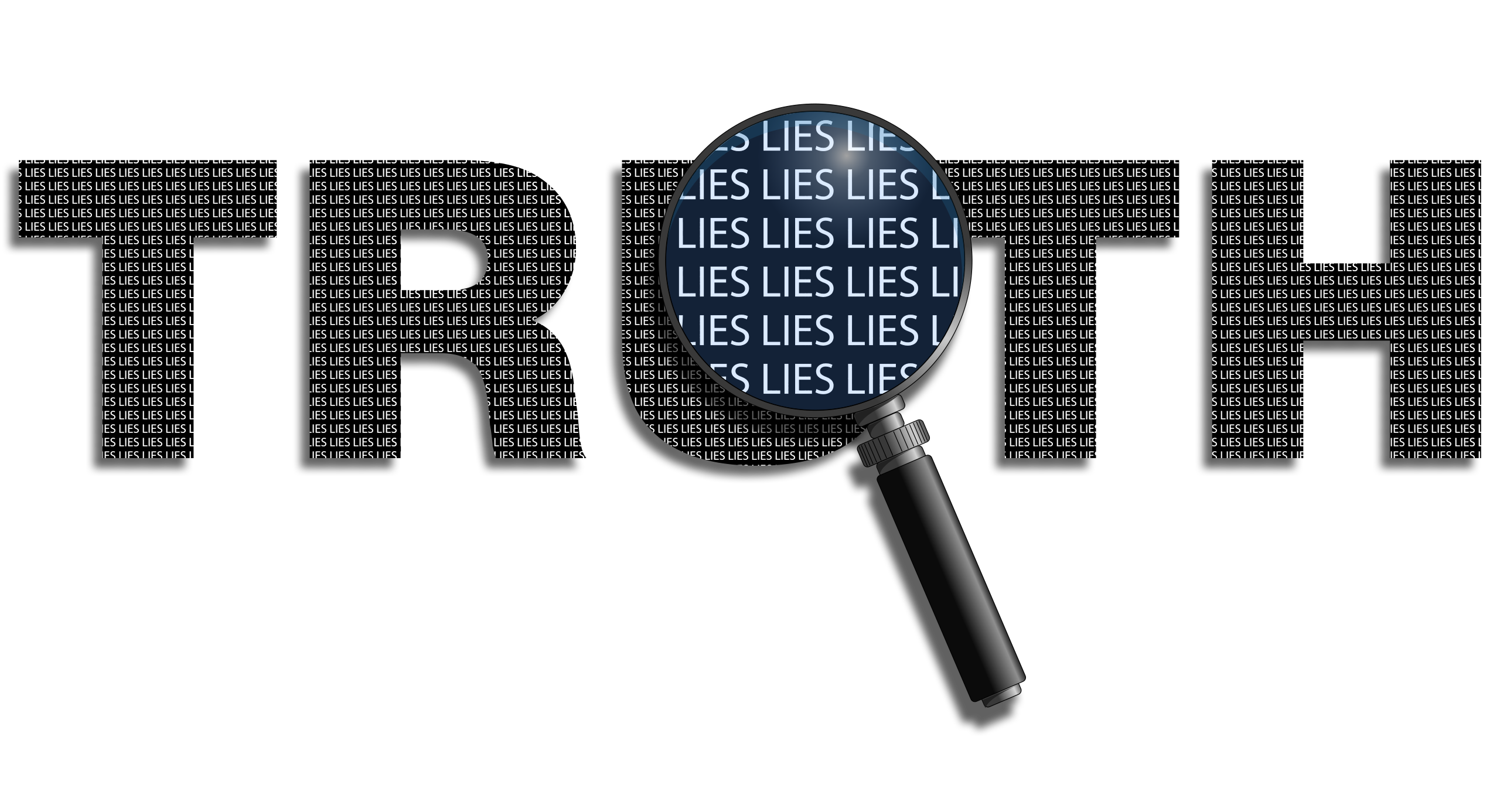
Posted in Education, Spirit of communication, Words | Leave a comment