Amid the courtroom traumas of lawfare and divisive political chatter we might call “jawfare,” one upbeat element of America’s news diet still speaks well of us.
Journalists chronicle this edifying subtext halfheartedly, more in its breach than in its observance.
The theme is an old-timey triad—truth, justice, and the American way. People publicly commit to embrace reality and integrity for the common good. To do this, we often use solemn oaths.
Some folks make headlines by breaking these bonds, but oaths endure as part of our civic DNA. By taking them, much of the populace gives a shout-out to human dignity in today’s laissez-faire public square. Without this infrastructure of hope, the media’s endless coverage of perjuries, prevarications, and misleading theatrics would be even more tragic than it is.
Through formal, sincere words, not so different from prayers, we pledge to others—and usually swear to God—that we will speak honestly and act honorably to accomplish something meaningful. Oaths lay the groundwork for hero stories.
Think of oaths as traffic lights our society installed at busy intersections—where the winding roads of individual lives and secular culture meet highways of virtue. Our inner GPS systems are free to roam the whole map, so we can choose routes.
The green arrows and turning lanes at moral crossroads are not mundane signage. They facilitate paths we need to take at key moments in our daily travels.
Oaths that keep all sorts of people moving on orderly journeys deserve deeper appreciation and renewed attention:
U.S. presidents-elect take a succinct oath at their inauguration.The text is mandated by Article II of the Constitution. Most presidents have added at the end, “So help me God.” We are told that all but a few have placed their hand on a Bible while swearing.
Vice presidents-elect, members of Congress, Supreme Court justices, and federal employees take a slightly longer oath. They too “solemnly swear (or affirm)” to support and defend the U.S. Constitution—“without mental reservation or purpose of evasion”—and to perform their duties “well and faithfully.” There is no mention of loyalty to a current president or any supervisor.
Lawful residents seeking naturalized US citizenship take an Oath of Allegiance. This caps a demanding process outlined at the US Citizenship and Immigration Services website. The ten steps include an interview, an English test, and a civics test. (The 128 possible questions for the 2020 civics test are found online.)
Elected and appointed officers of the 50 states are required to take an oath, although there are variations in the wording; the text from Texas is one example. Customization of the words increases as we reach down to municipal and other government offices.
Justices and judges in courts established by US law are required to solemnly swear they will “administer justice without respect to persons and do equal right to the poor and to the rich” under the Constitution and laws of the nation.
Witnesses in court trials take an oath which must be “designed to impress that duty [truthfulness] on the witness’s conscience,” as the Cornell Law School website explains. The paradigmatic promise is to tell “the truth, the whole truth, and nothing but the truth, so help me God.” The US House of Representatives impeached President Bill Clinton in 1998 for lying under oath and obstructing justice—based on his testimony in a lawsuit. The US Senate later acquitted him.
Those testifying before House or Senate committees will usually, but not always, be required to take an oath similar to that of a court witness. Deviations from the truth could lead to perjury penalties of a fine and/or five years in prison, says the Oberheiden law firm’s website.
Jurors in court trials may be asked to take two oaths, according to the Judicial Council of California Juror Handbook. Once potential jurors are assembled, they agree to answer truthfully the questions they’ll be asked by the judge and attorneys in the voir dire filtering process.Those selected for the case must then pledge “to decide [a verdict] using only the evidence from the trial” and “to follow the judge’s instructions about the law,” the handbook says.
Members of the military take an Oath of Enlistment, swearing to support and defend the US Constitution “against all enemies, foreign and domestic,” to bear allegiance to the Constitution, and to “obey the orders of the President of the United States and the orders of the officers appointed over me …. So help me God.” This text does mention a human to heed—the Commander-in-Chief.
Lawyers must be sworn-in before practicing within their various state bars. In California, for example, they pledge to support the US and state constitutions and, as officers of the court, to “strive to conduct myself at all times with dignity, courtesy, and integrity.”
Police officers take the oaths appropriate to them as officers of a particular locale. The International Association of Chiefs of Police also has set forth an Oath of Honor “to punctuate the importance of treating all individuals with dignity and respect and ensuring the preservation of human life.”
Most medical doctors take the Hippocratic Oath in its classical or revised forms, as administered by schools of medicine. There is no “so help me God” conclusion; indeed, the original statement, written as a code of conduct by Greek physician Hippocrates around 400 BC, swears by Apollo, Asclepius, and “all the gods and goddesses.” A common updated version excludes “do no harm” language, although it humbly asserts, “Above all, I must not play at God.”
In short, oaths are everywhere. Many of them are old, part of a legacy that we should preserve if our post-truth society tries to pave over those transcendent intersections or clearly drawn lines.
Oaths are not utilized much as modes of communication within religious circles. Some forms of signage exist, however. It is common to see the sign of the cross—body language for a Christian saying or doing something in the Lord’s name.
In the Catholic Church, there is no “inaugural oath” for a new pope. Nevertheless, all members of the College of Cardinals, which elects the pope, take an oath before their voting begins.
Among other things, cardinals agree as a group to keep their deliberations and votes secret. They add: “We likewise promise, pledge, and swear that whichever of us by divine disposition is elected Roman Pontiff will commit himself faithfully to carry out” the ministry of the Apostle Peter.
The ordination of Catholic priests requires them to make a series of solemn promises in the sacrament of Holy Orders. These include acceptance of celibacy, as well as obedience to their bishop. If the priest is joining a religious order, such as the Franciscans, he takes “vows” of poverty, chastity, and obedience.
By one definition, vows specify something to be done or avoided, while oaths regard the judgment and belief of the person—exercising one’s agency to choose proper actions and allegiances.
These terms may appear rarely within interfaith dialogues, but their application to everyday secular life can sound theological alarms.
“Vows and oaths are both considered weighty matters in Jewish thought,” according to the My Jewish Learning website. Some permissions are given, but not for “swearing casually,” says Torah.org. The scriptural prohibition in Numbers 30:3 holds sway, as does the instruction which Jews and Protestants call the Third Commandment and Catholics count as the Second Commandment: “Thou shalt not take the name of the Lord thy God in vain.”
The Catechism of the Catholic Church says some oaths are illegitimate, but taking oaths “for grave and right reasons (for example, in court),” is good—as long as they are applied “in truth, in judgment, and in justice.”
What’s more, according to the New Advent Catholic Encyclopedia, a legitimate oath can be considered “an act of homage rendered by the creature to the wisdom and omnipotence of the Creator.”
On the other hand, perjury displays a “grave lack of respect for the Lord,” according to the Catechism. A false oath sinfully “calls on God to be witness to a lie”—a fabrication which can do great damage to persons and to “the justice and fairness of judicial decisions.” (paragraphs 2151, 2152, 2476)
Alas, observers nowadays assess the gravity of perjury largely in terms of risking criminal prosecution, not in terms of societal solidarity, reputation, or conscience.
Our culture’s tendencies toward narcissism, relativism, and moralism lead us to judge actions by the advantages gained and to judge people by the emotions triggered. Fraught conflicts are the settings where we’re likely to explode into a very different genre we also call “oaths”—blasphemies and ugly turns of phrase.
It’s far more beneficial to take virtuous, well-considered, no-nonsense oaths, and to take them seriously.
They empower us with credibility and clout. They’re solid agreements we have made by which our actions and/or words participate in higher authorities and historical purposes. They show we’ve got our act together, and it’s not an act.
Oaths dignify us when we have shown resoluteness by making a firm promise. We add a note of homage if we swear to God, humbly requesting His help in our follow-through and boldly calling on Him as a character witness (or expert witness!) on our behalf.
Also, oaths unify us. They’re force-multipliers because they intensify elements of truth and trust which make relationships and teamwork possible. Our accountability to a shared mission is spelled out and affirmed as noble. We’re joined to predecessors who expressed the same aspirations.
Thanks to Americans who care about oaths, our memory that these have served society well can form a bulwark for the future.
They help prevent the nation’s principled “rule of law” from morphing into a Machiavellian strategy of “rule by law,” which is one definition of lawfare. And they’ll avoid our notion of “government as servant” morphing into reliance upon a “government as sugar-daddy,” a transactional distributor of goodies.
What can we do to shore up society’s storehouse of lofty, personal commitments? They inevitably come under micro-attack from indifferent individuals and macro-attack from those pushing alternative sources of power, dignity, and unity. People who conjure or promote their own big-picture worldviews often flap their jaws, or worse, against more traditional perspectives.
Here are five precautions we can take:
Model oath-adjacent lives, engaged in civil society where citizens recognize and share duties, goals, and hopes for the common good—to strengthen each other.
Model oath-capable lives, comfortable with aiming for excellence and focusing on reality’s panorama—the whole truth, and nothing but the truth.
Model weight-bearing lives, ready to sacrifice and suffer for the most important causes, prepared and motivated to pay the costs of faith and neighborly love.
Model value-literate lives, championing the genius built into our oaths—such as swearing loyalty to enduring principles of the Constitution and justice, not random bosses or convenient alliances.
Model seriously joyful lives, able to exhibit both intentionality and peace of mind, taming with purpose and prudence our urge for idle or hostile jawboning.
A refreshed attentiveness to oaths can improve the way we consume news about many subjects, from immigration and national security to laws and their enforcement. It may spark our imaginations and add wisdom to policy discussions, or clarity to friendly chats about how we see the world.
We might ponder which responsibilities resonate with us and can serve as the solid ground from which we’ll launch missions together. Could we find the concrete words to write an oath, or mission statement, for ourselves?
Let’s keep better track of the promises folks make and then breach—truths we profess and then betray. Solemn intentions provide the conscience with indicators, quantitative and qualitative, of righteousness.
In an age when some people define their own identities with little thought about greater potential or community roles, we might refine our identities partly with reference to the first and last words of the typical oath: “I, (state name), do solemnly swear to….. So help me God.” Using that formulation, we can say it all.
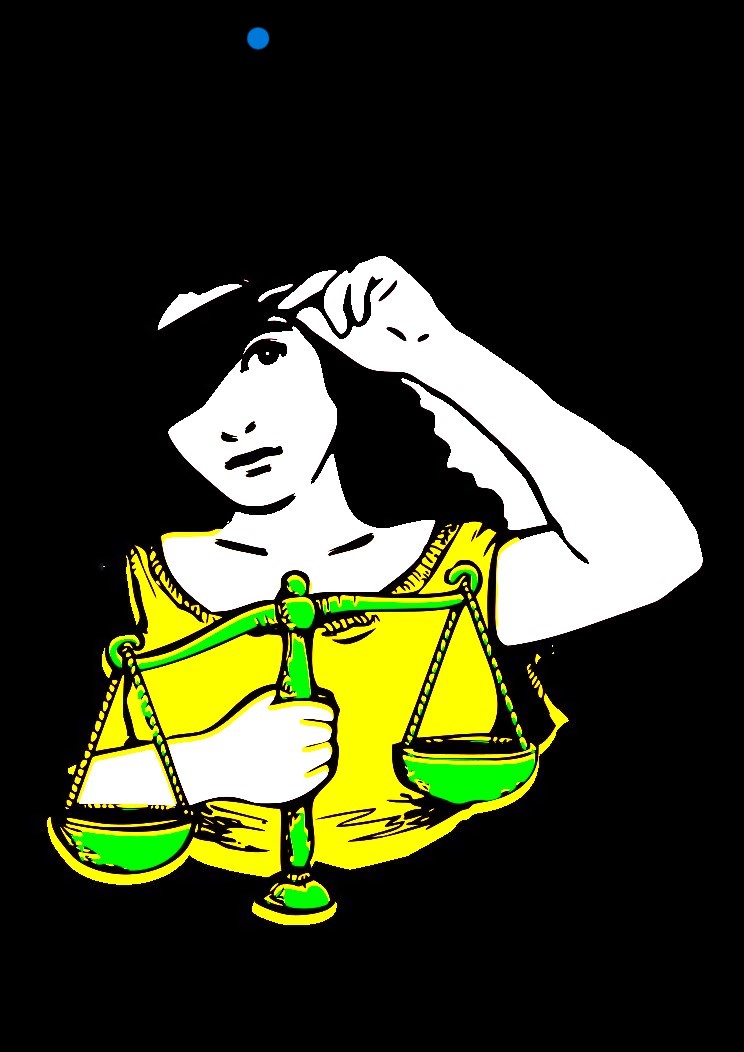
Image from ClipSafari.com, a collection of Creative Commons designs.


 OnWord